1. Kyler Murray Is Back
Coming off a torn ACL, Kyler Murray returned in Week 10 to lead the Cardinals to a win over the Falcons — who were holding sole possession of first place in the NFC South at the time. The big question heading into his comeback was whether his mobility, his single most dangerous weapon, had survived the injury. Based on how he looked in the fourth quarter, the answer was pretty clearly yes.
Week 10 — Kyler Murray's fourth-quarter play in the win over Atlanta:
Murray is one of the most underrated QBs in the league, and I'll die on that hill. He posted Offensive Rookie of the Year honors and two Pro Bowl selections on a rookie contract under a front office and coaching staff that gave him almost nothing to work with. One brutal playoff exit and a vague report about film study habits later, and somehow the narrative became "bust." It's absurd.
2. Baseball and the QB Position
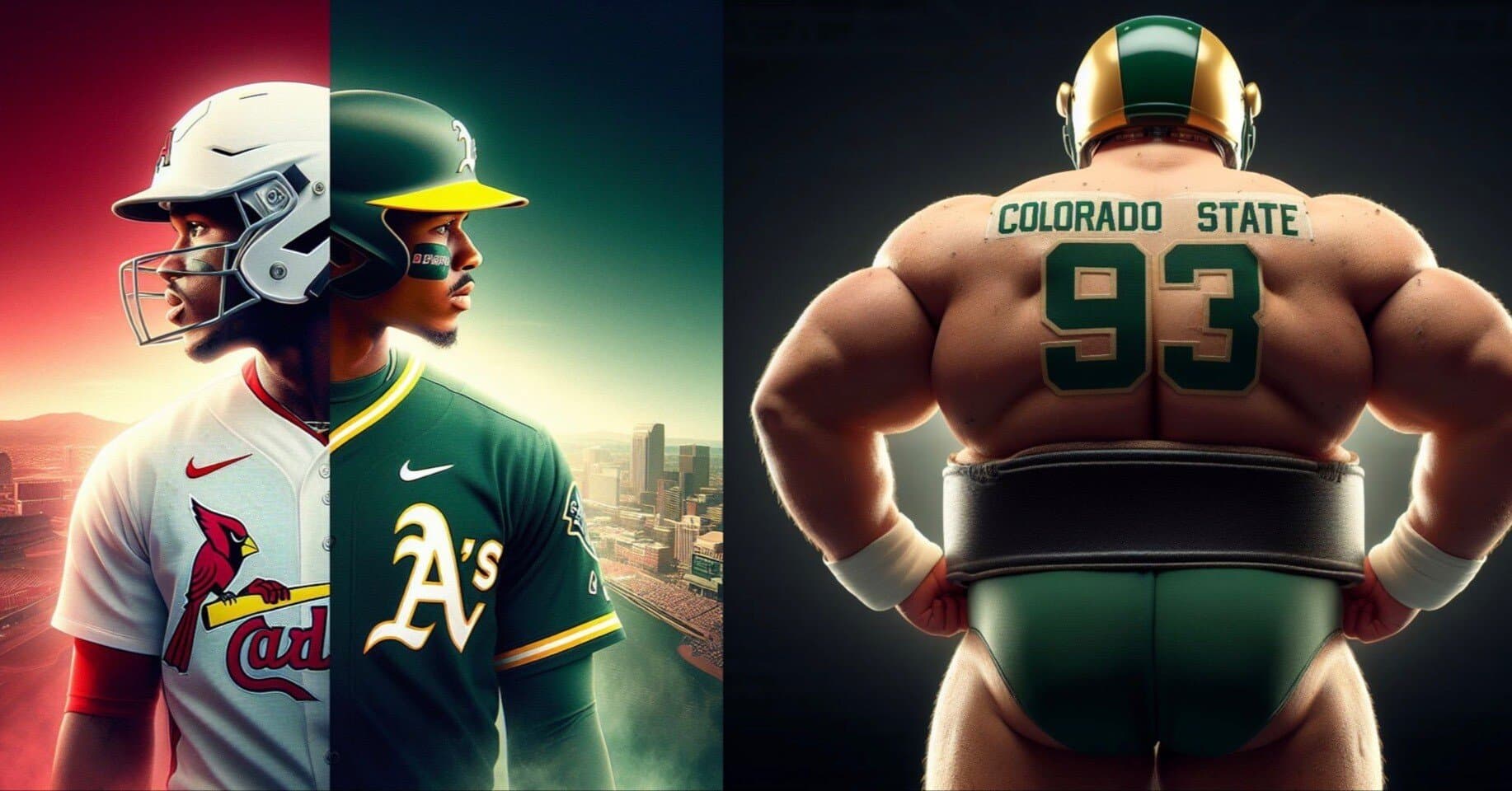
Murray's story makes for a natural entry point into today's topic, because when he came out of Oklahoma, the most talked-about part of his profile wasn't his arm — it was the fact that he'd been the first player in history to be drafted in the first round of both the MLB and NFL Drafts.
- June 2018: Selected ninth overall by the Oakland Athletics as an outfielder
- Fall 2018: Becomes Oklahoma's starting QB, wins the Heisman Trophy
- April 2019: Selected first overall by the Arizona Cardinals
That's a rare enough profile that it prompted a lot of conversation about whether baseball experience translates to NFL success. And that conversation had a real foundation: Brady, Mahomes, Russell Wilson — all had baseball backgrounds. The arm mechanics alone make the connection intuitive. Watch Mahomes sidearm a throw off his back foot and tell me that's not a shortstop.
Kyler Murray's dual first-round draft selection in the MLB and NFL:
But Murray's dual-draft story is the extreme outlier. The broader phenomenon — NFL players with baseball backgrounds — is far more common than most fans realize. There are reportedly enough baseball-playing QBs to fill out an entire two-way roster. A Kaepernick-Brady battery sounds about as functional as you'd expect.
NFL players (including QBs) who played baseball in high school or college:
The leap from observation to hypothesis is an easy one: if great QBs like Brady and Mahomes all played baseball, does multi-sport experience give NFL players an edge?
3. The Science Already Has an Answer (for Other Sports)
Christian McCaffrey has weighed in:
CMC on the value of multi-sport athletic development:
And it turns out the academic research supports his view — at least in other sports. The benefits of multi-sport participation (or more precisely, the risks of single-sport specialization from an early age) have been extensively studied, and the findings are consistent:
Early single-sport specialization increases the risk of overuse injuries and burnout.
The evidence is strong enough that multiple sports medicine organizations now actively advise against pressuring young athletes to specialize early.
Recent research paints a specific picture:
- Across sports generally: single-sport specialization tends to produce better results in junior-level competition, but multi-sport athletes outperform their peers in adulthood (Barth, 2022). The problem is that specialization is often incentivized — college scholarships, club coaches — so many athletes are pushed toward it regardless (Bell, 2017).
- In MLB: roughly half of all MLB players (especially those from outside the U.S.) specialized in baseball early (Ciccotti, 2020), but those who specialized before high school had higher rates of serious injury (Deitch, 2017) and lower total career games played (Lynch, 2019) — with the throwing arm taking the biggest hit.
- In the NBA: single-sport basketball players had lower game participation rates and higher rates of significant injury compared to multi-sport athletes (Pandya, 2017).
The through-line is the injury risk. Against this backdrop, academic research specifically on multi-sport athletes in the NFL is surprisingly sparse. As far as I can tell, only two peer-reviewed studies have tackled the question directly. Here they are.
4. Study 1: Most NFL First-Round Picks Were Multi-Sport Athletes
The first study looked beyond just QBs, examining whether 2008–2017 NFL first-round picks with multi-sport backgrounds differed in performance or injury rates from those who played only football.
"The prevalence of high school multi-sport participation in elite national football league athletes" Steinl, G. K.; Padaki, A. S.; Irvine, J. N.; Popkin, C. A.; Ahmad, C. S.; Lynch, T. S. The Physician and Sportsmedicine, 2021, 49, 476.
4.1. Findings
- Sample: 318 first-round picks from 2008–2017, analyzed for high school sports history, NFL career stats, and injury records.
- 88% of them — 280 players — were multi-sport athletes in high school; only 38 played football exclusively.
- When comparing career games played, games missed due to injury, and Pro Bowl selections, no statistically significant difference was found between multi-sport and single-sport players.
- Single-sport players were roughly 15 pounds heavier on average, but this is largely explained by the fact that single-sport athletes disproportionately became linemen.
4.2. What the Authors Made of It
- Even without a performance gap, the authors found it notable that 88% of elite NFL prospects came from multi-sport backgrounds — suggesting that broader athletic development helps players reach that level in the first place, consistent with research in other sports.
- Unlike MLB and NBA studies, no significant injury difference appeared here. The authors attribute this to the traumatic (rather than overuse) nature of most NFL injuries — broken bones and dislocations dominate instead of the ligament stress injuries that plague baseball pitchers.
4.3. My Take
Interesting work, but the data has obvious constraints. When 88% of your sample is multi-sport, statistical comparisons are going to struggle. Using Pro Bowl selections as the primary performance metric is also rough — selection rates vary enormously by position and era. And lumping all NFL positions together glosses over the fact that a wide receiver and an offensive lineman use their bodies in almost entirely different ways.
It also raises a question the paper doesn't directly address: what sport were these multi-sport athletes playing? That context below is instructive — some players transition between positions that demand very different body types:
A player transitioning from QB to TE — and the weight gain that comes with it:
5. Study 2: Multi-Sport QBs Outperform Single-Sport QBs
So what happens when you narrow the lens to a single position?
The second study did exactly that — comparing every NFL QB between 1995 and 2020 based on whether they played multiple sports in high school.
"National Football League (NFL) quarterbacks who were multisport high school athletes have better in-season performance statistics and career success" Allahabadi, S.; Gatto, A. P.; Kopardekar, A.; Davies, M. R.; Pandya, N. K. The Physician and Sportsmedicine, 2022, 51, 320.
5.1. Findings
- 403 QBs total. 223 (55%) were multi-sport athletes; 180 (45%) were single-sport.
- Multi-sport QBs had longer careers on average.
- Among QBs who appeared in 8+ regular-season games (298 players, 80% of whom were multi-sport athletes), multi-sport QBs posted statistically significantly better numbers across passing yards, TD count, completion percentage, INT rate, rushing yards, passer rating, playoff appearances, Pro Bowls, MVPs, and Super Bowl wins.
5.2. What the Authors Made of It
- Compared to the first study's finding of 88% multi-sport among all first-rounders, the QB-specific rate of 55% is notably lower. The authors suggest that because QB is such a specialized, one-of-a-kind position, more players feel pressure to focus on football early — possibly to their detriment.
- The playoff performance correlation was weak, which the authors attribute to small sample size and to the possibility that the gap between multi-sport and single-sport athletes narrows at the elite level (i.e., the QBs who make the playoffs are already highly filtered).
5.3. My Take
The playoff numbers feel incomplete — Tom Brady alone probably distorts that data significantly. But the career stat findings align cleanly with what the MLB and NBA research shows, and I find the conclusion convincing: for QBs specifically, a multi-sport background is a measurable advantage.
What the authors don't spell out, but seems worth noting: QB is the position on the field that throws the ball most. That's an obvious point of overlap with baseball in particular. The footwork, the weight transfer, the mechanics of releasing a ball on the move — those translate. It's not a coincidence that the list of QBs with baseball backgrounds reads like a Hall of Fame ballot.
 A chart confirming baseball backgrounds for several well-known NFL QBs — Brock Purdy found, Derek Carr not confirmed
6. Takeaways
Two studies, consistent conclusions: multi-sport experience is associated with making it to the top level of the NFL — and for QBs specifically, it's associated with performing better once you get there.
It's worth noting that "multi-sport" isn't the only version of this phenomenon. There's a growing wave of players transitioning from sumo wrestling, Australian Rules Football, and other sports, and the reports of unusually fast skill development keep coming. The underlying principle seems to hold: athletic skills transfer, and breadth compounds over time.
Given the pace at which research on this topic has appeared recently, expect more to follow. QB performance by secondary sport, position-specific breakdowns beyond QB, the impact of when specialization happens — each of those is its own paper waiting to be written. A few decades from now, it wouldn't surprise me if there's a well-developed methodology on the order of "if you want to play QB in the NFL, spend ages X through Y on sport Z." I'll keep covering the research as it develops.
Thanks for reading.
6.1. (Appendix) Athletes Transitioning Into Football From Other Sports
Other-sport-to-football transition example ①:
Other-sport-to-football transition example ②:
Other-sport-to-football transition example ③: